


Categories
Recommend
-

Sansi Four-column Electro-hydraulic Servo Pressure Tester: One Machine for Anti-collision Beam, Threshold Beam & Energy Absorption Box Testing
-
Analysis of Technology and Application of Sansi Testing's Chaoyue Series C-EUT5000 Electronic Universal Testing Machine
-
Good News | Shenzhen Sansi Testing Re-Assessed as National High-Tech Enterprise, Focusing on Innovation in Mechanical Testing Equipment
-
Full-Automatic Metal Pendulum Impact Testing Machine Delivered by Sansi Testing: Breaking Through Extreme Temperature Material Testing for Aerospace & Advanced Manufacturing
-
Core Function of SANS Electronic Universal Testing Machine (Tensile Machine) and How to Ensure Its Accuracy and Reliability



Contact Us

Service Hotline:
4008-482-582

Business Consulting :
Mr. Bi
139-2342-3642

Email:
vip@saastest.cn

Address:
215, Building Al, Kechuang Park, Songbai Road, Longteng Community, Shiyan Street, Baoan District, Shenzhen
Application and related standards of drop hammer impact testing machine in the field of composite materials industry
Author:Shenzhen Saas Testing Technology Co., Ltd
Click:
Time:2024-05-22 00:00:00
Composite materials must be composed of two or more material components with different chemical and physical properties, combined in the designed form, proportion, and distribution, with clear interfaces between each component; It has structural designability and can be used for composite structure design. Classified by composition, it can be divided into metal to metal composite materials, non-metal to metal composite materials, and non-metal to non-metal composite materials. According to its structural characteristics, it is divided into fiber-reinforced composite materials. Composite various fiber-reinforced materials within the matrix material. Such as fiber-reinforced plastics, fiber-reinforced metals, etc.
Due to their lightweight, high specific strength and modulus, as well as good ductility, corrosion resistance, thermal conductivity, thermal insulation, sound insulation, vibration reduction, high (low) temperature resistance, ablation resistance, electromagnetic wave transmission, wave absorption concealment, designability, flexibility in preparation, and ease of processing, composite materials are ideal materials for manufacturing military weapons such as aircraft, rockets, and spacecraft. In the aerospace field, it is generally used to manufacture aircraft wings and forebodies, satellite antennas and their supporting structures, solar cell wings and shells, shells of large launch vehicles, engine shells, space shuttle structural components, etc.
The application of drop hammer impact testing machine in the field of composite materials has attracted much attention, mainly used for testing the impact resistance of various composite materials (such as carbon, glass, plastic, nylon, etc.). It plays a crucial role in evaluating and verifying the properties of materials to improve product quality and safety. To ensure the accuracy and reliability of these applications, it is necessary to strictly comply with national standards and regulations. In China, the application of the drop hammer impact testing machine needs to comply with relevant standards such as GB/T14547-93 'Determination of Impact Properties of Resin based Composite Materials' and GB/T13525-92 'Basic Principles of Tensile Properties Test Methods for Resin based Composite Materials'. There are other relevant standards (executed according to the latest version of the year), such as the product design and manufacturing standard: GB/T2611 'General Technical Requirements for Testing Machines'; In the product metrological inspection standard: GB/T 3808-2002 'Inspection of Pendulum Impact Testing Machines' JJG 145-2007 'Verification Regulations for Pendulum Impact Testing Machines'; In commonly used test standards: GB/T14153 'General rules for impact test method of hard plastics by drop hammer' GB/T14152 'Test method for external impact resistance of thermoplastic pipes - clockwise rotation method' GB/6112 'Test method for impact resistance of thermoplastic pipes and fittings (drop hammer method)'.
In summary, these standards provide detailed regulations on the specific operating procedures, equipment requirements, testing parameters, and other aspects of composite materials in impact testing, ensuring the accuracy and comparability of test results. Only by strictly following these standards for testing can reliable data be obtained, providing scientific basis for the design and production of composite materials. At the same time, these standards also provide benchmarks for product comparison between enterprises, promoting the development and standardization process of the composite materials industry.
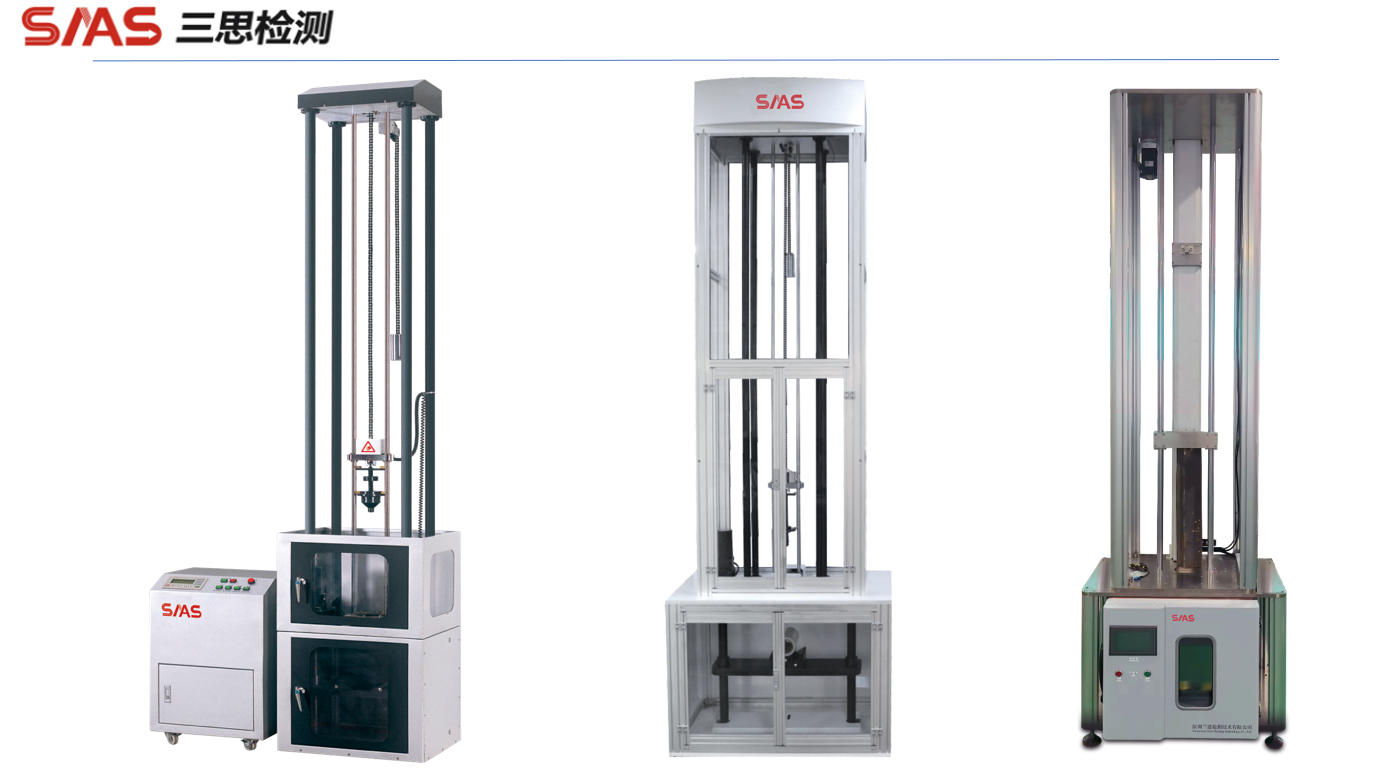
In addition to Chinese national standards, there are also some relevant international standards that regulate the drop hammer impact test. For example, the American ASTM International has released ASTM D5628-94 'Impact Test Standard for Resin based Composite Materials', and the European Organization for Standardization has released EN 6032-1 'Determination of Impact Properties of Resin based Composite Materials'. These standards are widely used globally, providing a unified technical specification for international exchange and cooperation in the composite materials industry.
Based on the above, the application of the drop hammer impact testing machine in the field of composite materials needs to meet the requirements of multiple national standards. Only by strictly following these standards during testing can the accuracy and comparability of test results be ensured, providing solid technical support for the research and production of composite materials. With the continuous promotion and improvement of standardization work, it is of great significance to promote the healthy development of the composite materials industry.

Prev : In the scorching summer heat, people from Sansi are fighting hard to test the high temperature and persistent creep testing machine of the testing unit. Large quantities of orders have been placedNext : The 61st Fuzhou Higher Education Exhibition Shenzhen Think Test as an excellent exhibitor was interviewed by the chemical instrument network

Service Hotline
4008-482-582
vip@saastest.cn
215, Building Al, Kechuang Park, Songbai Road, Longteng Community, Shiyan Street, Baoan District, Shenzhen
Friendly Link1:https://www.saastest.cn/
Friendly Link2:https://www.chem17.com/product/detail/38039629.html
Products
Service
Contact Us
PREV
NEXT
Scan the code to follow us

WeChat Public

Micro-signal

Tiktok

Bilibili
